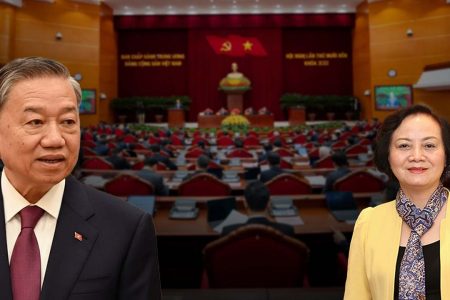
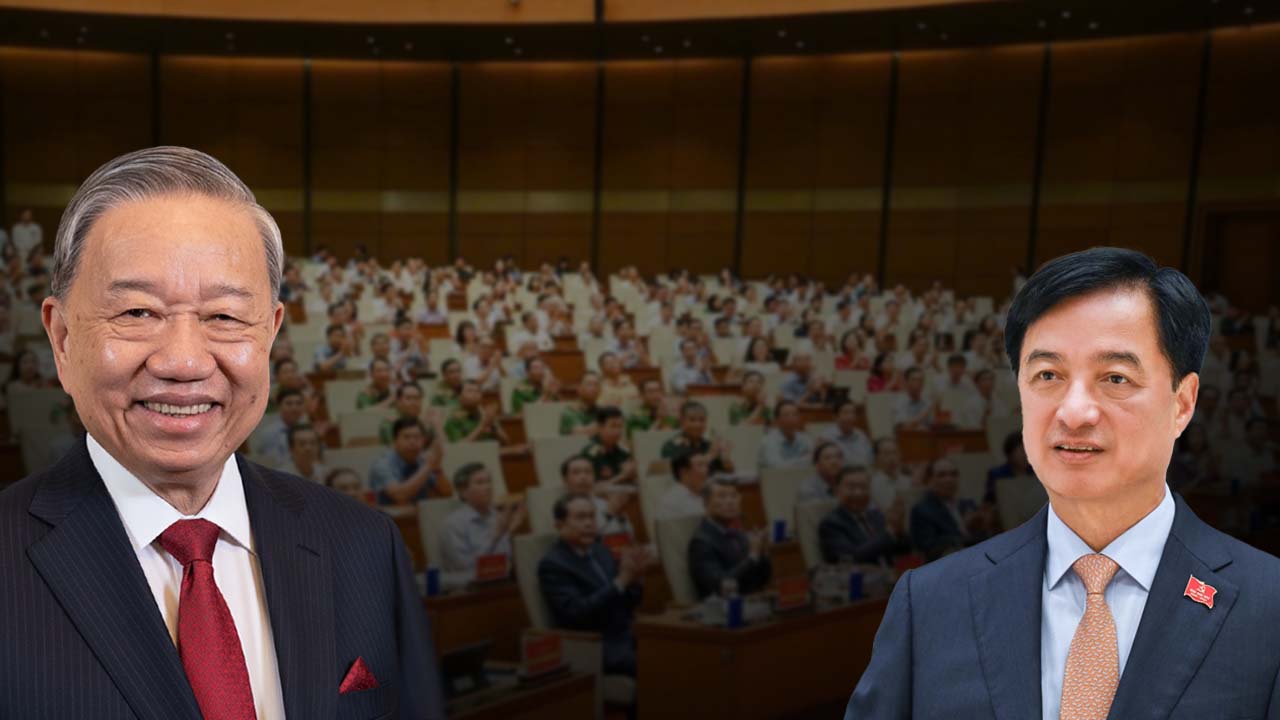
On September 3, 2026, at the National Congress of the Communist Party of Vietnam, Nguyễn Duy Ngọc, Head of the Central Organization Commission, made a statement that drew attention by emphasizing a shift in governance philosophy.
According to Mr. Ngoc: “For a long time, we have focused on scrutinizing what officials have done wrong. In this new phase, we need to also consider another question: Regarding matters within your responsibilities and authority, why haven’t you done them?”
According to observers, Mr. Ngoc—one of Mr. To Lam’s closest confidants—is calling for the system to fully embrace the principle that “failure to act also entails responsibility” in order to put an end to the practice of passing the buck.
Notably, Mr. Nguyen Duy Ngoc called for a clear distinction between those with “pure motives” who face legal obstacles—so they can be protected—and officials who are “afraid of making mistakes” and therefore dare not act, so that the latter can be dealt with strictly and those who dare to tackle difficult tasks do not face greater risks.
However, at first glance, this appears to be a forceful message aimed at removing the “bottlenecks” in the machinery of Vietnam’s political system that have existed for years.
Yet, while Mr. Nguyen Duy Ngoc’s question is valid on the surface, the root cause of the system’s paralysis over the past many years has been completely sidestepped.
Namely, the lack of fairness and factionalism within the political system of the Communist Party of Vietnam, as well as the reality of how decisions regarding high-level personnel appointments are implemented.
Accordingly, the phenomenon of leaders fearing accountability or being unwilling to make decisions is neither spontaneous nor a recent development.
According to Reuters, the “anti-corruption campaign”—which has lasted more than a decade—along with internal power struggles has significantly slowed down the operations of the state apparatus.
Delays or postponements in approving public investment projects have stalled billions of dollars in public funds and foreign investment, while also sowing significant anxiety among investors.
It is worth noting that lower-level officials are not cowardly or lazy. They fear making mistakes because reality shows that, for the same signature or approval decision, if someone has strong backing, they will be praised for “daring to think and act.”
Conversely, those not aligned with the top leadership face ruthless criminal prosecution. When disciplinary actions target only the vulnerable, the “fear of making mistakes” becomes a natural survival instinct among civil servants.
When Mr. Nguyen Duy Ngoc argues that we must distinguish between those with “pure motives” and those who are “afraid of making mistakes,” public opinion raises the question: Who will have the authority to draw that line?
In a political system where evaluation criteria are qualitative, the measure of “pure motives” is effectively in the hands of those in power.
A problematic project, if approved by someone belonging to the “Hung Yen interest group,” is easily overlooked; conversely, others from outside the group can face legal consequences for even the slightest mistake, while public criticism is strictly controlled.
At the same time, the public has come to realize that violations committed by high-ranking officials or influential figures are often handled superficially. The people—and even grassroots officials themselves—see this paradox very clearly.
Mr. Ngoc’s question, “Why not do it?”—without a solid legal foundation and safeguards for those enforcing the law—will only create a new layer of pressure. Leadership officials will not be foolish enough to “take risks” when the legal system remains convoluted, lacks sufficient transparency, and is inconsistent.
Therefore, the question posed by the Head of the Central Organization Commission should actually be reversed: Since this is the system’s responsibility, why hasn’t the system ensured fairness and transparency first?
For officials to truly dare to take action, the prerequisite is that the law must transcend factional interests and that “off-limits” zones must be eliminated.
Trà My – Thoibao.de