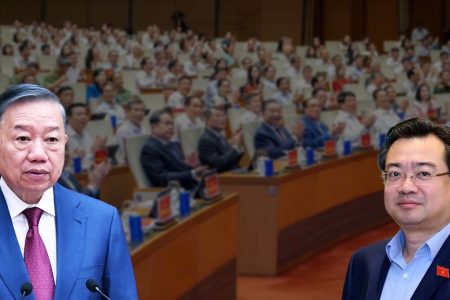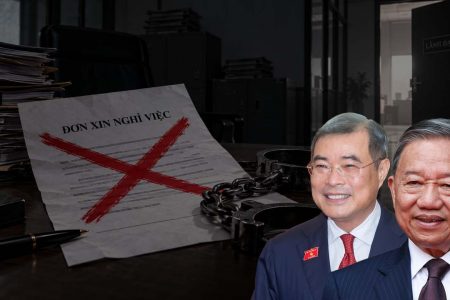
On October 12, 2026, at a session of the National Assembly’s Standing Committee, the September 2026 Report on Citizen Petitions—presented by Lê Thị Nga, Chair of the Committee on Citizen Petitions—noted that the resolution rate for voter petitions had reached 99.9%.

According to observers, in theory, this near-perfect figure reflects a significant effort by the National Assembly, the Government, and various ministries and agencies in the process of receiving and processing information.
However, this 99.9% figure immediately met with skepticism and strong backlash from the vast majority of the public, exposing an absurdly wide gap between “fabricated reporting techniques” and “real-life experiences.”
According to experts in public administration, the root cause of this discrepancy lies in the very definition of what constitutes “processed” in the current procedure for resolving citizens’ complaints.
In administrative practice, a single written response—even if its content is merely a promise such as “under review” or “being examined”—is automatically marked as “completed.”
But for citizens, such an “automatic” written response does not equate to any real-world changes or positive developments in line with their wishes.
In stark contrast to the “99.9%” figures glossed over in parliamentary debates, right now, countless problems persist in hotspots such as Vinh Hung, Linh Nam, Ba Vi, and Hong Ha.
Residents in these areas are worn down by a never-ending cycle of complaints stemming from paltry land compensation rates that are insufficient for them to purchase an on-site resettlement plot.
Collective petitions sent repeatedly are met only with boilerplate “in accordance with procedure” responses that are then set aside. As a result, the people’s legitimate rights remain in limbo, compounded by the lingering fear of delays in the “bureaucratic” procedures.
To make matters worse, the people’s financial strain has reached a breaking point due to skyrocketing land taxes, while overlapping administrative procedures are placing severe, overwhelming pressure on both residents and local officials.
It doesn’t stop there: thousands of so-called “stalled planning projects,” dragging on for decades, not only result in a massive waste of national resources but also directly deprive millions of households of their right to stable housing, the right to repair their homes, or the ability to mortgage their property.
This massive disconnect has become so acute that even high-ranking National Assembly leaders have found it unacceptable, calling these figures “beautiful but hollow numbers.”
According to Standing Vice Chairman of the National Assembly Do Van Chien, who bluntly questioned the matter and demanded that voters’ opinions and petitions be substantively addressed rather than merely met with vague, general responses.
At the same time, Mr. Chien demanded that the National Assembly’s apparatus clearly distinguish between notification documents and those that have been “fully processed,” and absolutely refuse to allow the practice of falsifying statistics to inflate achievements.
According to experts, the root cause of the disconnect between the legislative arena and social reality lies in the state apparatus’s mindset of information monopoly.
The delusion that administrative documents and rosy statistics can be used to mask the stifling reality in society reflects an extremely short-sighted and immature mindset on the part of the administrative apparatus.
Public opinion holds that, to eliminate this monopoly on information and restore oversight to its proper, substantive role, the handling of public petitions requires systematic breakthroughs.
A public, online National Citizen Petition Portal must be established immediately, allowing citizens to easily track the progress of each case.
Do not forget: while a written response from any government agency may be finalized on paper, it can never truly resolve the people’s issues if their lives remain unsettled.
Trà My – Thoibao.de
=======
The National Assembly’s 99.9% Resolution Rate for Voters’ Petitions vs. Real-Life Reality: Who Should the People Believe?
“… The figure of 99.9% of voters’ petitions being resolved is completely at odds with reality, exposing a culture of performance metrics and eroding public trust.”
#Vietnam #ChinhTruongVN #Thoibao