Vietnam has just officially reached a historic milestone, as the total value of imports and exports in the first 10 months of 2026 surpassed the $1 trillion mark for the first time. This colossal figure reflects the scale of trade and Vietnam’s increasingly significant role in the global supply chain.
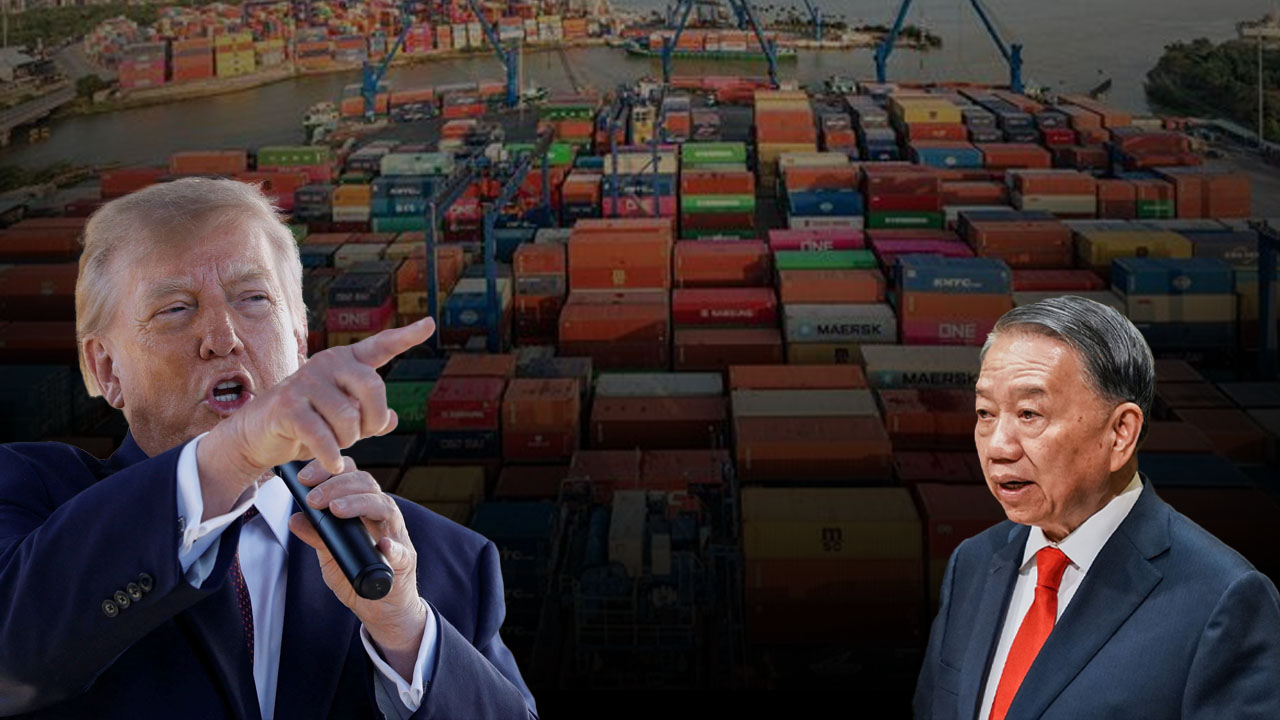
However, behind the praise for this macroeconomic achievement lies a risky economic paradox: The more Vietnam exports to the U.S., the greater the risk of Washington scrutinizing the true origin of its goods.
Statistics for the first nine months of 2026 have revealed a sensitive trade structure: the U.S. ran a trade deficit of 122.600 trillion USD with Vietnam, while, conversely, Vietnam also faced a comparable deficit of 121.500 trillion USD with China.
These nearly identical figures are seen as a stark illustration of an economy functioning as a transit hub, where components, machinery, and raw materials from China flow into factories in Vietnam for processing and assembly before being labeled as “Made in Vietnam” and exported to the U.S. market.
According to international observers, this model is, by its nature, not uncommon in international trade, where countries leverage advantages in labor costs and infrastructure to specialize in specific stages of the export production process.
However, as Hanoi’s scale has expanded at a dizzying pace, core weaknesses in the domestic production structure have begun to surface. While Vietnam may record export figures in the billions of dollars, the actual value added that remains within the country is extremely modest.
When a product is exported under a Vietnamese brand but, in reality, its “essence”—from technology and machinery to raw materials—is entirely dependent on foreign sources, that growth is essentially just a facade masking the fragility of the domestic economy.
Domestic enterprises are primarily engaged in low-value-added processing stages, thereby turning the economy into a buffer zone vulnerable to geopolitical fluctuations.
Amid the ongoing U.S.-China trade war, the deadline for the conclusion of U.S. investigations into intellectual property and origin issues is fast approaching. The greatest risk is now taking shape as Washington begins to tighten its grip on Hanoi.
A number of major U.S. industry associations are urgently calling on the Trump administration to impose new tariffs and trade sanctions on Vietnam.
U.S. policymakers have every reason to question the reality: Are goods shipped from Vietnam to the U.S. merely a transshipment scheme—a sophisticated tax-evasion tactic to legitimize Chinese origin—or are they the products of a genuine manufacturing process?
If U.S. trade regulators issue a strict ruling, key industries such as electronics, machinery, and manufacturing will immediately face sky-high costs, protracted inspection procedures, and the risk of losing their core competitive advantages.
The Vietnamese economy is caught in a double bind: if China suddenly tightens the supply of raw materials, domestic factories will grind to a halt due to a lack of inputs; and if the U.S. erects tariff barriers, finished goods will be stuck at the export stage.
When both of these pressures strike simultaneously, the system’s resilience will be shattered. For this reason, the milestone of over 1,000 tỷ USD in trade volume cannot prove that Vietnam’s economy is truly growing stronger.
If Vietnam cannot master technology and secure self-sufficiency in raw materials, today’s record-breaking trade figures will quickly turn into the crushing burden of a collapse in the not-too-distant future—a future in which Vietnam will pay a heavy price for a dependence that lies completely beyond its control.
Trà My – Thoibao.de